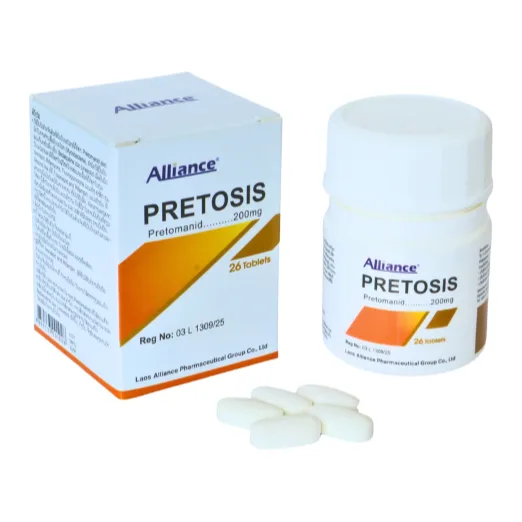
Brand name: PRETOSIS
Composition:
Each tablet contains:
Pretomanid……………………….…….200mg
Indications:
- Limited Population: Pretomanid Tablet is an antimycobacterial indicated, as part of a combination regimen with bedaquiline and linezolid for the treatment of adults with pulmonary tuberculosis (TB) that is resistant to isoniazid, rifamycins, a fluoroquinolone and a second line injectable antibacterial drug OR adults with pulmonary TB resistant to isoniazid and rifampin, who are treatment-intolerant or nonresponsive to standard therapy. Approval of this indication is based on limited clinical safety and efficacy data. This drug is indicated for use in a limited and specific population of patients.
- Limitations of Use:
- Pretomanid Tablets are not indicated in patients with:
- Drug-sensitive (DS) TB
- Latent infection due to Mycobacterium tuberculosis
- Extra-pulmonary infection due to Mycobacterium tuberculosis
- TB resistant to isoniazid and rifampin, who are responsive to standard therapy and not treatment-intolerant
- TB with known resistance to any component of the combination.
- Safety and effectiveness of Pretomanid Tablets have not been established for its use in combination with drugs other than bedaquiline and linezolid as part of the recommended dosing regimen.
Dosage:
- Pretomanid Tablets must be administered only as part of a regimen in combination with bedaquiline and linezolid as follows:
- Pretomanid Tablet 200 mg orally once daily for 26 weeks. Swallow Pretomanid Tablets whole with water.
- Bedaquiline 400 mg orally once daily for 2 weeks followed by 200 mg 3 times per week, with at least 48 hours between doses, for 24 weeks for a total of 26 weeks
- Linezolid (1,200 mg daily orally for up to 26 weeks, with dose adjustments for known linezolid toxicities).
- Take the combination regimen with food.
- Doses of the regimen missed for safety reasons can be made up at the end of treatment; doses of linezolid alone missed due to linezolid adverse reactions should not be made up.
Contraindications: Pretomanid Tablets used in combination with bedaquiline and linezolid are contraindicated in patients for whom bedaquiline and/or linezolid is contraindicated.
Warnings:
• Hepatic adverse reactions were reported with the use of the combination regimen of Pretomanid Tablets, bedaquiline, and linezolid. Monitor symptoms and signs and liver-related laboratory tests. Interrupt treatment with the entire regimen if evidence of liver injury occurs.
• Myelosuppression was reported with the use of the combination regimen of Pretomanid Tablets, bedaquiline, and linezolid. Monitor complete blood counts. Decrease or interrupt linezolid dosing if significant myelosuppression develops or worsens.
• Peripheral and optic neuropathy were reported with the use of the combination regimen of Pretomanid Tablets, bedaquiline, and linezolid. Monitor visual function. Obtain an ophthalmologic evaluation if there are symptoms of visual impairment. Decrease or interrupt linezolid dosing if neuropathy develops or worsens.
• QT prolongation was reported with the use of the combination regimen of Pretomanid Tablets, bedaquiline, and linezolid. Use with drugs that prolong the QT interval may cause additive QT prolongation. Monitor ECGs. Discontinue the combination regimen of Pretomanid Tablets, bedaquiline, and linezolid if significant ventricular arrhythmia or if QTcF interval prolongation of greater than 500 ms develops.
• Reproductive effects: Pretomanid caused testicular atrophy and impaired fertility in male rats. Advise patients of reproductive toxicities seen in animal studies and that the potential effects on human male fertility have not been adequately evaluated.
• Lactic acidosis was reported with the use of the combination regimen of Pretomanid Tablets, bedaquiline, and linezolid. Consider interrupting linezolid or the entire combination regimen of Pretomanid Tablets, bedaquiline, and linezolid dosing if significant lactic acidosis develops.
Adverse Effects:
Most common adverse reactions (≥10%) are peripheral neuropathy, acne, anemia, nausea, vomiting, headache, increased transaminases, dyspepsia, decreased appetite, rash, pruritus, abdominal pain, pleuritic pain, increased gamma-glutamyl transferase, lower respiratory tract infection, hyperamylasemia, hemoptysis, back pain, cough, visual impairment, hypoglycemia, abnormal loss of weight, and diarrhea.
Dosage form: White to off-white, oval-shaped tablet debossed
Expiry date: 36 months from the date of manufacture.
Packaging: 26 tablets per bottle.
Storage:
• Store below 30 °C.
• Dispense only in original container and keep container tightly closed.
• Keep out of reach of children.
DISCLAIMER
The information on this website about our medications is intended for general educational purposes only and should not be considered a substitute for professional medical advice, diagnosis, or treatment. Never disregard professional medical advice or delay seeking care because of something you have read on this website.
For your safety:
Do not self-diagnose or treat any medical condition based solely on the information on this website. If you have any questions or concerns about a medication, please talk to your doctor or pharmacist.